
The Roles That Will Be Hardest to Fill in the PNW for the Rest of 2026
If any of these roles are on your hiring plan this year, one piece of advice: start earlier than you think you need to.
Washington state has the highest concentration of tech workers of any state in the country. According to CompTIA's State of the Tech Workforce 2026 report, 9.3% of the workforce is in tech. On paper that sounds like a talent-rich market. In practice, the roles companies need most right now are the hardest ones to fill, and the gap between demand and available supply is wider than most hiring managers expect going into the second half of 2026.
Here is what we are seeing in active searches right now.
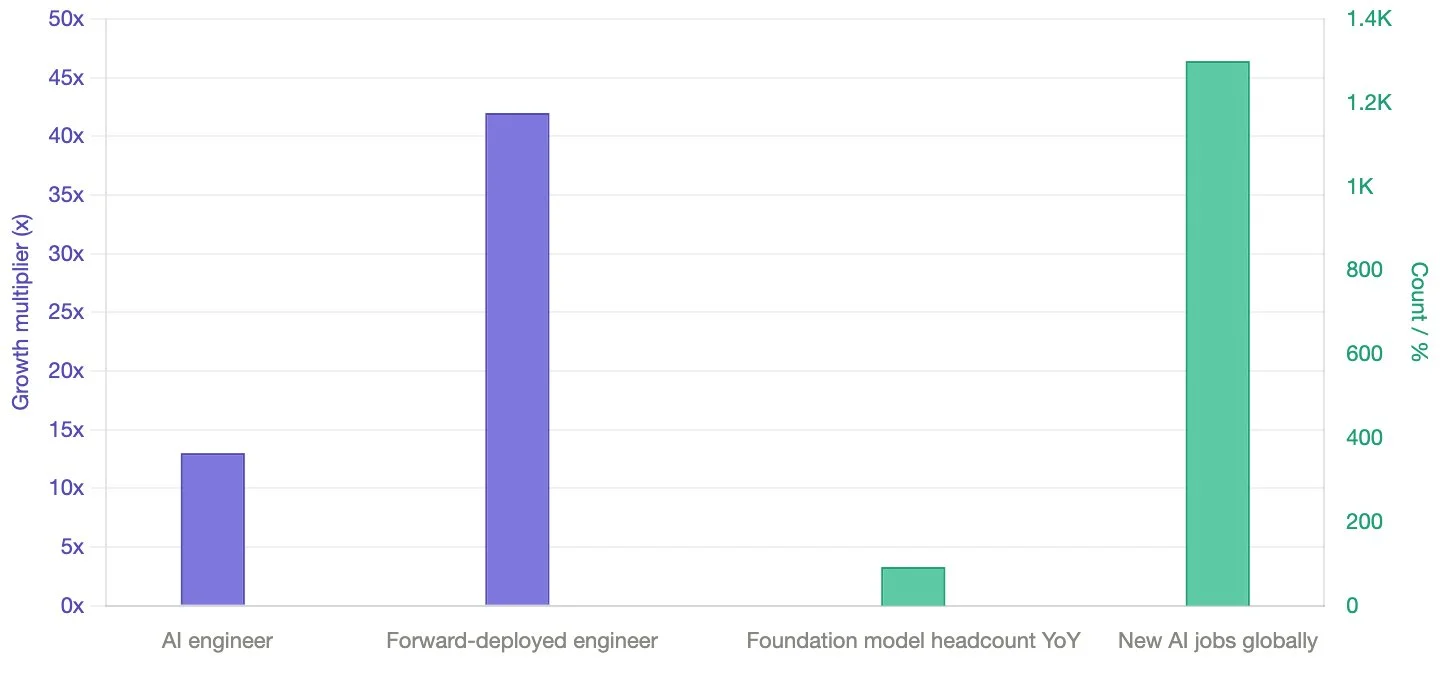
Source: LinkedIn Labor Market Report, January 2026 — LinkedIn Economic Graph Research Institute
AI and Machine Learning Engineers
AI Engineer roles have grown 13 times over since 2023, according to LinkedIn's January 2026 Labor Market Report. Foundation model companies alone grew headcount 92% year over year, and the broader market created over 1.3 million new AI-related jobs globally between 2023 and 2025. The number of people qualified to fill senior roles in this category has not come close to keeping pace.
The supply problem is structural, not temporary. The pipeline for senior AI talent depends on graduate programs that take years to produce qualified candidates. At the junior and mid levels, new entrants are arriving, but the gap at the senior and staff level remains significant and shows no signs of closing quickly.
If you need someone who can build, fine-tune, or deploy models at scale, you are competing with Amazon, Microsoft, and a dozen well-funded startups for the same short list of people. Getting to that person before someone else does requires starting the search before the role feels urgent.
Cybersecurity Engineers
Demand for cybersecurity professionals continues to outpace supply across the country. In the Pacific Northwest specifically, the combination of major enterprise tech employers, a growing defense and aerospace sector, and an influx of AI infrastructure investment in Central Washington means local demand is outpacing an already thin talent pool.
Cybersecurity is also a field where the credential-to-competency ratio varies enormously. Finding someone with the right certifications is relatively straightforward. Finding someone who can operate effectively in your specific environment, your stack, your threat model, your team, is a different and much harder problem.
Companies that treat cybersecurity hiring as a standard engineering search consistently struggle. Those that approach it as a specialized search with a longer runway get better outcomes.
DevOps and Cloud Engineers
Every company modernizing its infrastructure needs DevOps and cloud engineering talent. The demand is broad, consistent, and shows no sign of softening. The supply of experienced practitioners, specifically people who have genuinely owned infrastructure at scale rather than supported it, remains limited.
Part of what makes this role particularly hard to fill in the PNW is the competition from hyperscalers. When AWS, Azure, and Google Cloud are all hiring cloud engineers in your backyard, the comp expectations of candidates in this space reflect that. Smaller companies and mid-market employers often find themselves losing searches not because their opportunity is worse, but because they entered the process without a realistic picture of what the market demands.
Senior Sales Leaders for SaaS Companies
The profile is narrow: someone who has built or led a revenue team, carries credibility with enterprise buyers, understands a complex sales cycle, and can operate at the pace a growth-stage SaaS company requires.
There are not many of these people. The ones worth hiring are rarely actively looking. And the ones who are actively looking are usually fielding multiple conversations simultaneously.
Senior sales leadership searches move fast or they do not move at all. A process that takes eight weeks to get to an offer will almost always lose the candidate they wanted most to a company that moved in three.
What This Means if You Are Hiring in These Areas
A few practical takeaways based on what we are seeing in the market:
Start the search before the role is urgent. The best candidates in each of these categories are not sitting on job boards. Reaching them, building trust, and moving through a process takes time. Companies that start searching reactively, after the need becomes critical, consistently get worse outcomes than those who move proactively.
Understand what the market actually pays. Compensation expectations in all four of these categories are being set by the largest, best-funded employers in the region. Coming in below market is not a negotiating position. It is a signal to the candidate that you have not done your homework.
Move fast when you find the right person. In high-demand categories, the window between identifying a strong candidate and losing them to another offer is shorter than most hiring managers expect. A streamlined process is not just a candidate experience improvement. It is a competitive advantage.
Frequently Asked Questions
Why are these roles so hard to fill in the Pacific Northwest specifically?
Washington state has the highest concentration of tech workers in the country, which means demand from employers is dense and competition for talent is intense. Candidates in high-demand categories often have multiple opportunities in front of them simultaneously, which compresses timelines and raises expectations on compensation and process quality.
How long should we expect these searches to take?
For AI and machine learning and senior sales leadership roles, a realistic timeline from search launch to accepted offer is 60 to 90 days when the process is well run. Cybersecurity and DevOps searches typically run 45 to 75 days depending on seniority and specialization. Searches that start reactively or move slowly through interviews tend to run significantly longer.
Is it worth using a recruiting firm for these roles?
For roles where the candidate pool is small and the best people are passive — not actively applying — a recruiting partner with existing relationships in the relevant talent community can meaningfully shorten the search timeline and improve candidate quality. For roles where strong candidates are actively applying, an internal process may be sufficient.
What can we do to compete with larger employers for this talent?
Speed, transparency, and a compelling story about where the company is headed. Candidates who have options, and in these categories the best ones always do, are evaluating the process itself as a signal of what it would be like to work there. A fast, clear, well-communicated process is one of the most effective recruiting tools a company has.
How often do these market conditions change?
Hiring conditions in high-demand technical categories can shift relatively quickly. The data referenced in this article reflects market conditions as of mid-2026. For the most current picture of what specific roles look like in the PNW market, talking to a recruiter actively working in those categories is the most reliable source.
If any of these roles are on your radar for the second half of the year, the best time to start the conversation is before the pressure is on.
SOURCES: CompTIA State of the Tech Workforce 2026 (comptia.org) | LinkedIn Labor Market Report, January 2026 (economicgraph.linkedin.com)